Norway’s scenery is the star attraction, but ship-organised excursions can quickly become one of the biggest costs of the holiday. On my 14-night cruise visiting nine ports, I tried local buses, bikes, independent operators and self-guided days. I did not feel as though I was doing less. I simply spent my money where it created the best experience.
1. Book a local activity close to the ship in Skjolden
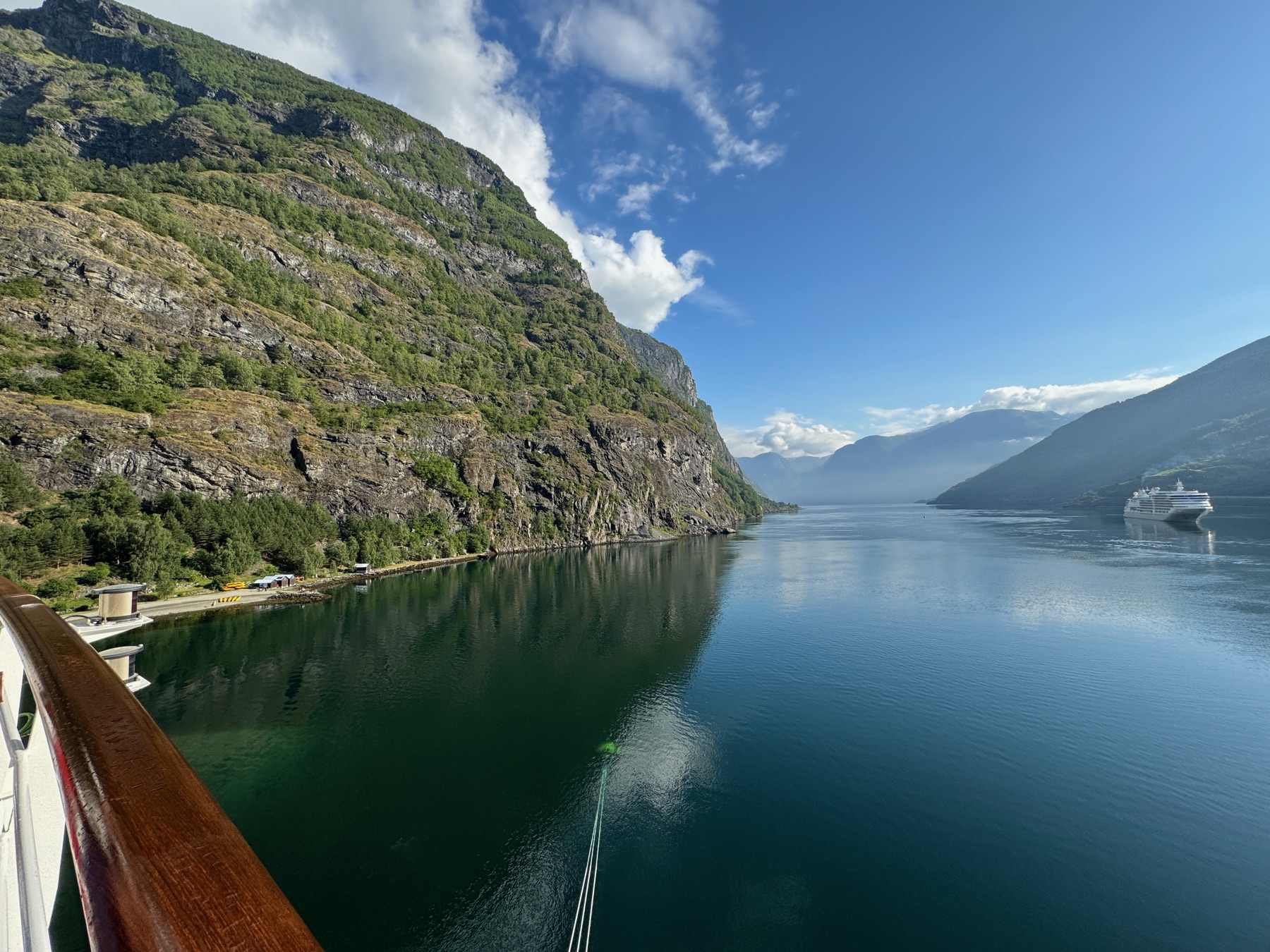
In Skjolden I booked stand-up paddleboarding with a local operator only a short walk from the berth. The water was glacially cold, the fjord was wonderfully quiet and the view from water level felt completely different from anything I would have seen through a coach window. The same operator also rented e-bikes, so it was easy to build a full independent day around one location.
I search for the port name and activity before sailing, then pin the operator on a map. A cheap booking loses its appeal if it needs an expensive taxi at both ends. I also allow time to return equipment and check the missed-port policy before paying.
2. Take the public bus from Olden to Briksdal Glacier
Rather than joining a ship coach, I used the local bus from Olden towards Briksdal Glacier. My fare was 56 NOK each way and the journey took roughly 30 to 40 minutes. It was one of the most scenic bus rides I have taken. From the stop, the climb towards the glacier took me about 40 minutes and was strenuous in places.
This is exactly the sort of DIY day that needs timetable discipline. I note the final return bus, work backwards from the ship’s all-aboard time and leave a generous buffer. The saving is attractive, but the real reward is having the walk and the scenery at my own pace.
3. Use city bikes or e-scooters in Trondheim
Compact Norwegian cities are perfect for swapping a panoramic coach for two wheels. I bought a Trondheim city-bike day pass for 59 NOK through the app, returning each bike to a station before taking another for the next hour. I later tried an e-scooter day pass for 119 NOK and covered even more ground.
I download the operator’s app while I still have reliable Wi-Fi, create the account and check where riding and parking are permitted. A bike is ideal when I want to stop for photographs; a scooter is quicker but demands more confidence on unfamiliar streets. Wet surfaces deserve respect on both.
4. Explore Tromsø by ordinary local bus
In Tromsø I used bus 42 between the port area and the centre, then bus 26 towards the cable car. I bought a day ticket in the local transport app before boarding. Other passengers tried to pay the driver with cards or euros and were caught out, which made the app worth setting up in advance.
A day ticket can connect the port, city centre and a major attraction for a fraction of the cost of a packaged transfer. I save the journey plan and ticket to my phone, identify the stop for the return journey and leave enough time to take an earlier bus back to the ship.
5. Hire a bicycle in the Lofoten Islands
At Gravdal in the Lofoten Islands, I found bicycles beside the tender landing and tourist information point. I paid 300 NOK for a conventional bike; an e-bike was twice the price. My seven-mile ride across the peninsula to Vik beach gave me quiet roads, cold air and the freedom to stop whenever the landscape demanded another photograph.
Before setting off I check the terrain, forecast and distance, save an offline map and make sure the hire desk leaves a comfortable margin before the last tender. I chose the conventional bike, but on a hilly or windy day the e-bike could easily be money well spent.
6. Compare independent tours, not just free activities
Some Norwegian highlights are too far from port for a casual walk or bus ride. I booked a small-group North Cape tour from Honningsvåg and an all-day catamaran from Ålesund through three fjords to Geiranger. Neither was nearly free, but both delivered long, memorable days for less than comparable ship excursions.
When my ship reached Haugesund too late for a pre-booked waterfall trip, the independent operator contacted me promptly and issued a full refund. That experience reinforced my rule: I confirm the missed-port and late-arrival policy, read reviews from other cruise passengers and ask exactly how the operator protects the return-to-ship deadline.
A sensible DIY excursion checklist
I find independent days work best when the saving is paired with a simple plan. I keep these checks in one note on my phone so the important details are available offline.
- Use the ship’s all-aboard time, not the published departure time.
- Confirm whether the ship docks or tenders and where you will actually arrive.
- Save timetables, tickets, maps and the operator’s telephone number offline.
- Build a return buffer and identify a backup taxi or earlier service.
- Choose bookings with clear missed-port and late-arrival protection.